
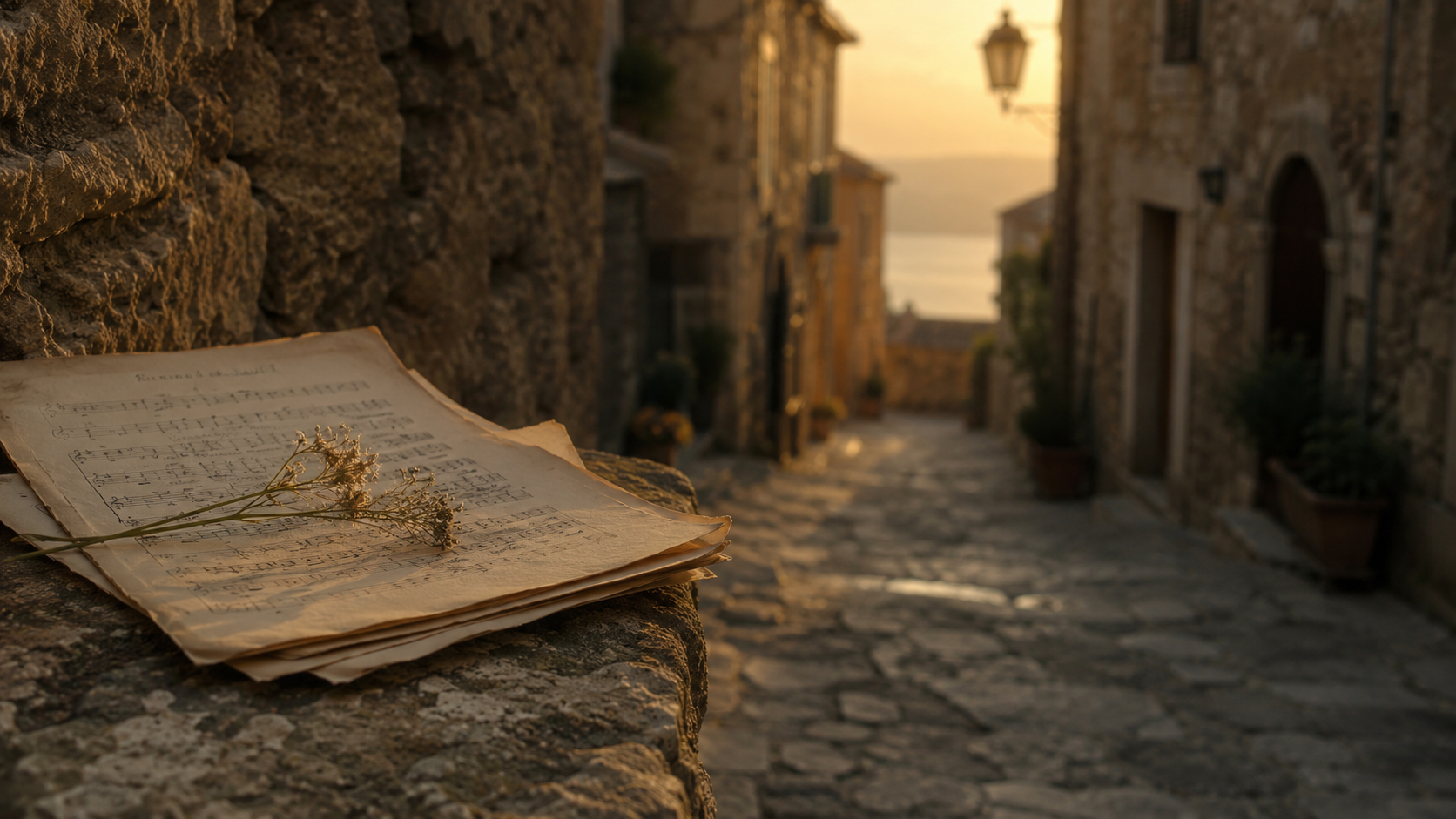
Few classical guitar pieces are as instantly recognizable as Spanish Romance.
Built from a simple, flowing arpeggio and a haunting melody on the upper strings, the piece has become one of the best-known works in the entire classical guitar repertoire. For generations of guitarists, it has also been an early milestone: approachable enough to attempt relatively soon, yet surprisingly difficult to play with real refinement.
The piece is known by many names, including Romance Anónimo, Romance de Amor, Romance d’Amour, Spanish Romance, and sometimes simply Romance. It is also closely associated with René Clément’s 1952 film Jeux interdits, released in English as Forbidden Games.
And that is where its history becomes particularly interesting.
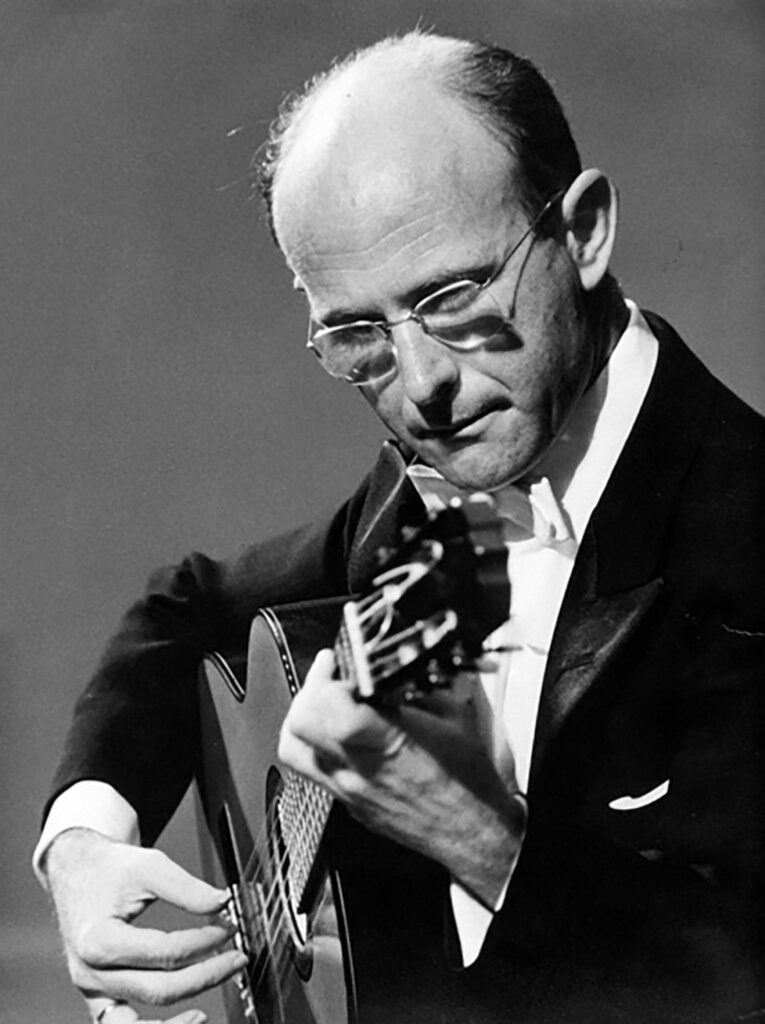
The guitarist who made the piece famous through the film was Narciso Yepes. Yepes would later claim that he had composed it himself as a child.
But surviving manuscripts and recordings show that the melody existed decades before he was even born.
So who actually wrote Spanish Romance?
Even today, there is no definitive answer.
Forbidden Games and Narciso Yepes
A War Film Seen Through the Eyes of Children
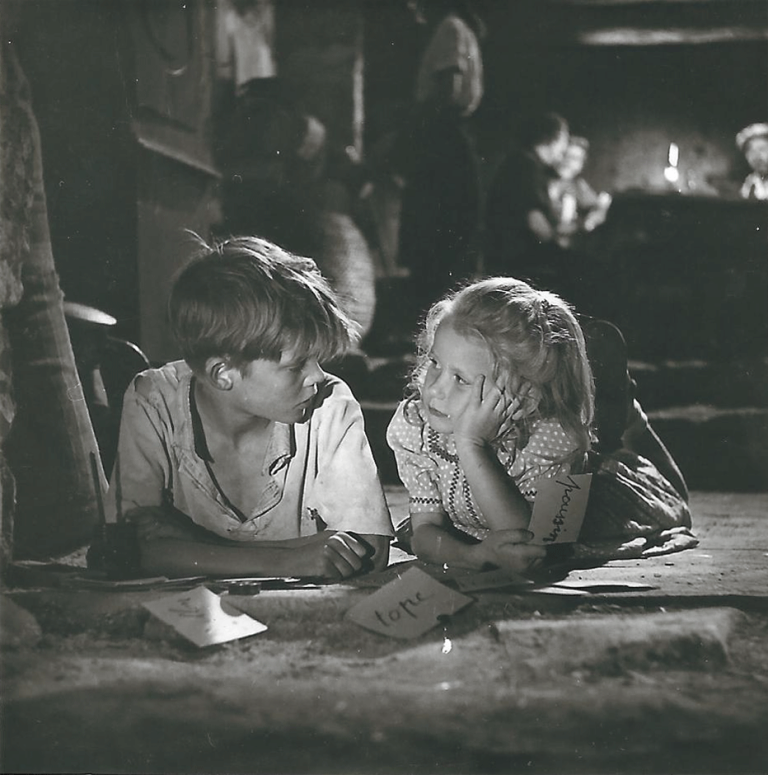
Forbidden Games (Jeux interdits, 1952), directed by René Clément
Source: Fondation René Clément / Photo: Tomatis
Forbidden Games (Jeux interdits) was directed by René Clément and released in 1952.
Set in France during the Second World War, the story follows Paulette, a young girl whose parents are killed during an air raid. She is taken in by a rural family and becomes close to their son, Michel.
Unable to fully understand the death and destruction surrounding them, the two children begin creating a private cemetery for dead animals. Their strange ritual becomes a way of confronting loss in a world dominated by adult violence.
The film received major international recognition, including the top prize at the 1952 Venice Film Festival and an Honorary Academy Award for Best Foreign Language Film.
Narciso Yepes and the Film’s Guitar Music
Its sparse and intimate use of guitar music became one of the film’s most memorable features.
That guitar was played by Narciso Yepes.
However, describing Yepes simply as the film’s “composer” can be misleading.
The original French credits identify his role as:
“Adaptation musicale et interprétation — Narciso Yepes”
In other words, Yepes was responsible for the musical adaptation and performance.
The soundtrack did not consist entirely of newly composed music. It included pre-existing works and traditional melodies adapted for guitar, including music associated with Robert de Visée and the Catalan folk song El testament d’Amèlia.
Yepes was therefore not merely performing a newly written film score in the modern sense. He selected, arranged, adapted, and performed guitar music that helped shape the emotional world of the film.
The Melody That Became Inseparable from the Film
Among all of those pieces, one melody became inseparable from Forbidden Games.
That melody was the piece we now know as Spanish Romance.
The film did not create the melody, but it provided the setting through which millions of listeners first encountered it.
The Musical Heart of Forbidden Games
Why the Guitar Fits the Film So Well
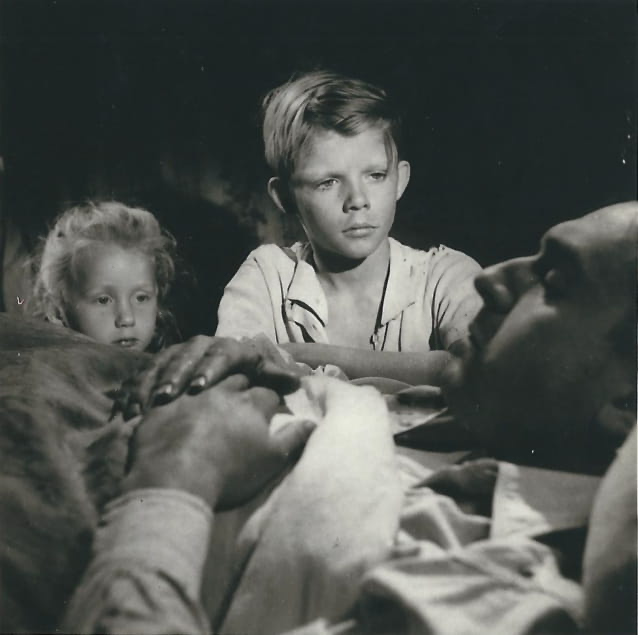
Forbidden Games (Jeux interdits, 1952), directed by René Clément
Source: Fondation René Clément / Photo: Tomatis
The quiet sound of the guitar fits Forbidden Games remarkably well.
This is not a heroic war film. There are no grand orchestral themes glorifying conflict. The story is viewed primarily through the eyes of children, and much of its emotional power comes from the contrast between their innocence and the brutality surrounding them.
The simplicity of Spanish Romance reflects that atmosphere.
Its minor-key melody is melancholy without being overly dramatic. It can sound tender, lonely, innocent, and nostalgic at the same time.
Music That Belongs to Paulette and Michel’s Small World
Film critic Peter Matthews, in his Criterion Collection essay “Forbidden Games: Death and the Maiden,” draws attention to the very moment when Yepes’s guitar music begins to enter the film.
At the beginning of the story, Paulette loses her parents in an air raid and is left in the midst of the brutal reality of war. After meeting Michel, however, she gradually enters a smaller, more private world built around the children’s secrets, games, and their makeshift cemetery.
Matthews sees the arrival of Yepes’s guitar as marking the transition into this other world. He also describes the music’s simple, plaintive quality as something that seems to linger over the entire film, evoking a sense of nostalgia for a lost time.
The guitar never overwhelms the images or demands attention. Instead, it has an intimacy that makes it seem as though the music is coming from within the small world shared only by Paulette and Michel.
Seen in this way, Spanish Romance is more than simply beautiful background music. It can also be heard as music that helps define the boundary between the adult reality of war and the separate world the two children create for themselves.
A Piece Older Than the Film, but Redefined by It
This connection helped transform the piece.
Spanish Romance did not originate with Forbidden Games, but for millions of listeners, the film effectively became its defining context.
The melody and the film became so closely linked that in some countries the piece itself is still referred to by the film’s title.
Did Narciso Yepes Compose Spanish Romance?
Yepes’s Claim of Authorship — and Evidence That Predates Him
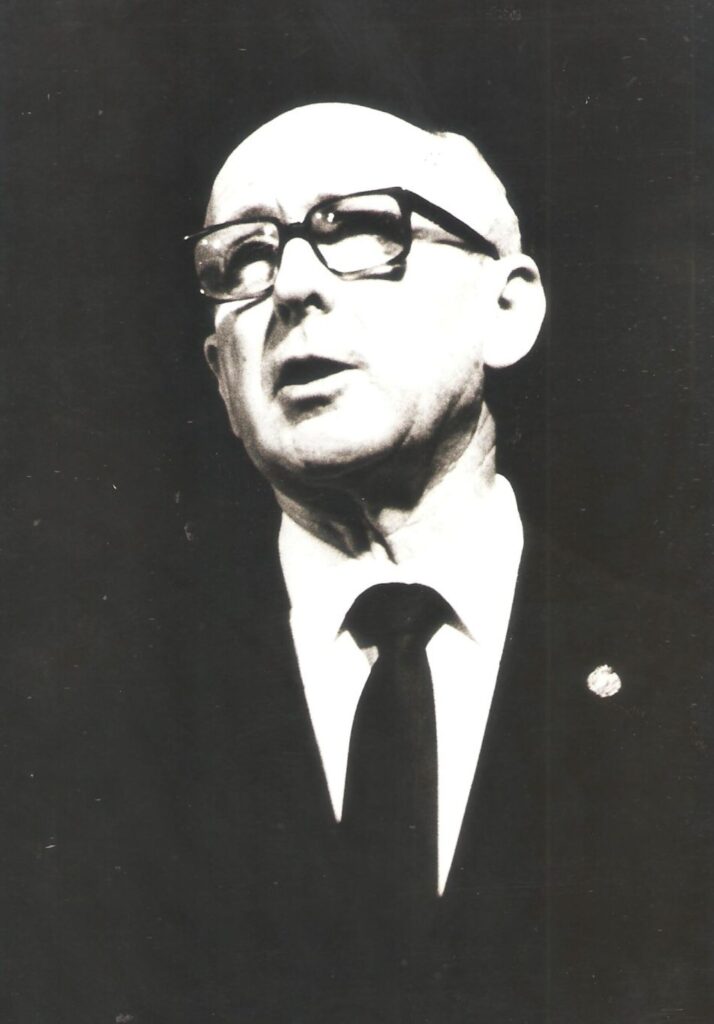
Narciso Yepes himself claimed that he had composed the piece.
According to Yepes, he wrote it for his mother around 1934, when he was only seven years old.
He also said that he performed the piece as a child at the Teatro Guerra in his hometown of Lorca.
Years later, after hearing another guitarist perform the same melody as an anonymous work, Yepes seems to have believed that a piece he had written in childhood had somehow spread without his name attached to it.
It is certainly a fascinating story.
There is, however, one major problem with this claim.
The same piece appears to have existed before Yepes was even born.
Yepes was born in 1927, while surviving sources containing music that is essentially the same as Spanish Romance can be traced back to the 19th century.
For that reason, it is very difficult to argue that Yepes created the entire piece we now know as Spanish Romance completely from scratch in the 1930s.
Still Important as the Yepes Version
Of course, this does not mean that Yepes had no meaningful connection to the piece.
It is possible that he remembered or arranged the melody in his own way, and the version used in Forbidden Games undoubtedly reflects Yepes’s own musical choices and interpretation.
However, the most reasonable conclusion is that the fundamental melody and structure of the piece have a history that predates Yepes himself.
Was Spanish Romance Originally a Guitar Study?
The Antonio Rubira Manuscript
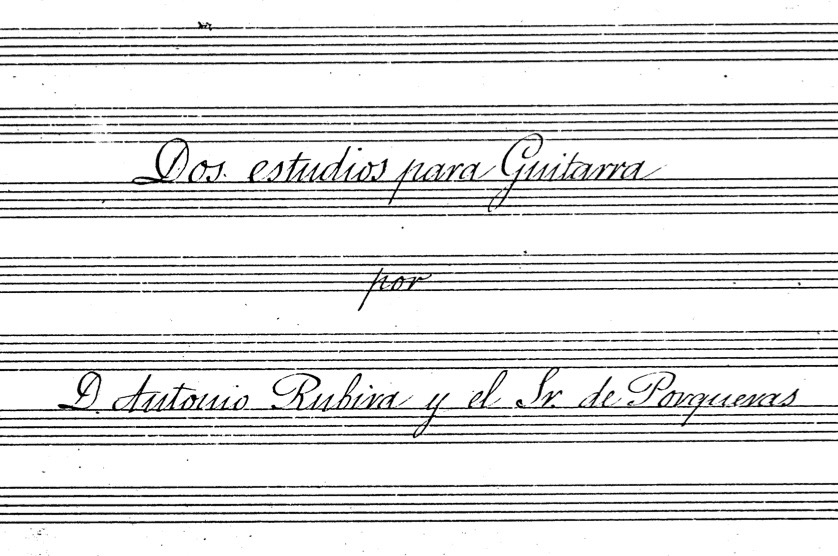
One of the most important pieces of evidence comes from historical research into Spanish guitar manuscripts and early recordings.
A surviving manuscript contains a work titled simply Estudio—“Study”—associated with the nineteenth-century Spanish guitarist Antonio Rubira.
The music is recognizably the same piece now known as Spanish Romance.
Why the Music Makes Sense as a Study
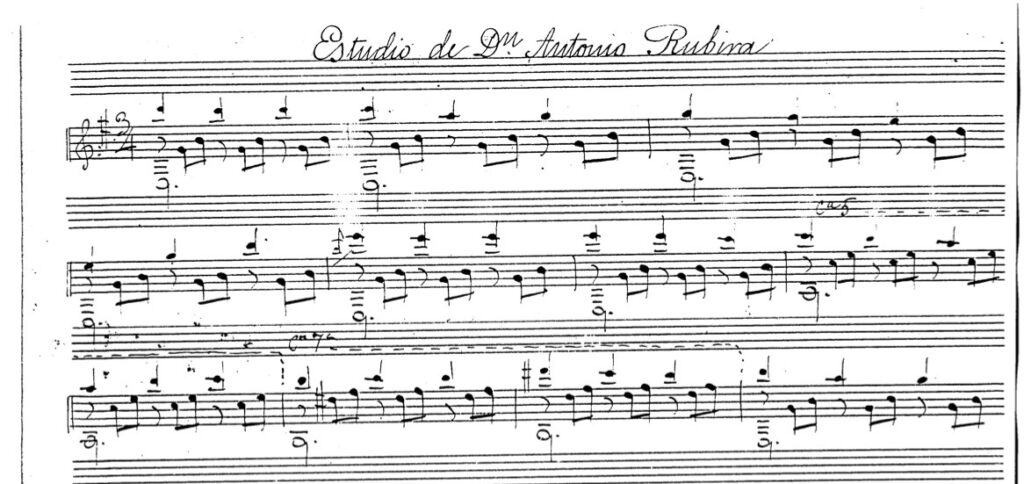
What makes this theory particularly interesting is that, when you actually play Spanish Romance on the guitar, the piece does indeed have a remarkably effective structure for technical practice.
In the version most commonly played today, the right hand generally repeats an arpeggio pattern of 1st string → 2nd string → 3rd string, using a → m → i. The upper voice on the 1st string carries the melody, while the 2nd and 3rd strings form the accompaniment underneath.
However, the old manuscript associated with Rubira uses a different arpeggio order from the version commonly heard today.
After the melody note on the 1st string, the pattern moves to the 3rd string and then the 2nd string, which in a typical right-hand fingering would correspond to a → i → m. In other words, the accompaniment notes are reversed compared with the modern 1st → 2nd → 3rd string pattern (a → m → i).
Even so, the basic principle remains the same: the right hand maintains a repeated arpeggio pattern while the left hand changes positions and chord shapes, and the upper voice is made to sing as a melody.
Through the piece, the player can practice several fundamental classical-guitar skills at once:
- maintaining an even arpeggio pattern
- bringing the melody out above the accompaniment
- shifting smoothly between left-hand positions
- using barre chords
- sustaining notes while controlling several independent voices
These are all core techniques in classical guitar playing.
Seen from this perspective, it is quite understandable that some early sources transmitted the piece not as a Romance, but as an “Estudio” — a study or étude.
Estudio en Mi de Rubira
The manuscript associated with Rubira is one reason his name is often mentioned in discussions of the piece’s authorship.
The composition is sometimes even called Estudio en Mi de Rubira—Rubira’s Study in E.
This title preserves an intriguing possibility: one of classical guitar’s most famous melodies may once have been regarded simply as an instructional piece.
Was Antonio Rubira the Composer?
A Strong Candidate
Possibly.
Antonio Rubira, sometimes referred to as the Marqués de Rubira, was a Spanish guitarist and teacher active during the nineteenth century.
Surviving material connects his name with a version of the piece that clearly predates Narciso Yepes.
That makes Rubira a much more historically plausible candidate than Yepes.
Why the Manuscript Is Not Definitive Proof
However, a manuscript bearing a musician’s name does not necessarily prove that the musician composed the work.
The name could refer to an arranger, teacher, copyist, performer, or simply the person through whom the piece was transmitted.
That distinction is important when dealing with nineteenth-century guitar music, much of which circulated through handwritten copies, teaching collections, and informal transmission.
Other Names Linked to the Melody
Other composers and guitarists have also been associated with the melody over the years, including Fernando Sor and Francisco Tárrega.
None of these attributions has been conclusively proven.
That is why the most cautious—and still one of the most common—titles for the piece remains:
Romance Anónimo
“Anonymous Romance.”
An Early Recording from Around 1900
Evidence Captured on a Wax Cylinder
The historical mystery becomes even more compelling when we move from manuscripts to sound recordings.
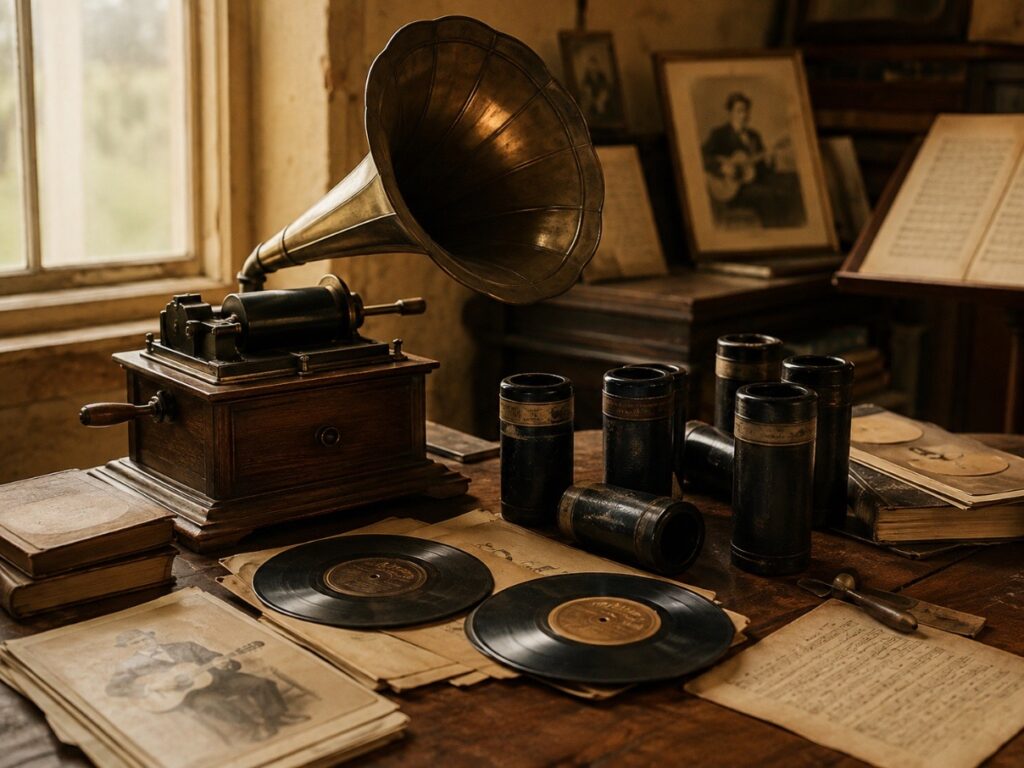
Research has identified a wax-cylinder recording made sometime around 1897–1901 containing the familiar piece.
The surviving documentation appears to identify it as a guitar study, with a title referring to “Sort” or “Sor,” performed by S. Ramírez.
Why the Recording Matters
Whatever the exact historical attribution behind that label, the important fact is clear:
the melody was already being performed and recorded around the turn of the twentieth century.
That was roughly three decades before Narciso Yepes was born.
This is exceptionally important evidence because it shows that the work was not simply sitting unnoticed in a manuscript. It was already part of the living guitar repertoire.
A Tradition Older Than Yepes
The piece therefore belongs to a guitar tradition considerably older than its famous appearance in Forbidden Games.
By the time Yepes encountered the melody, it may already have been circulating among guitarists for decades.
It Appeared in a Film Before Forbidden Games
Vicente Gómez and Blood and Sand
There is another remarkable chapter in the story.
The melody appeared in a major film more than a decade before Forbidden Games.
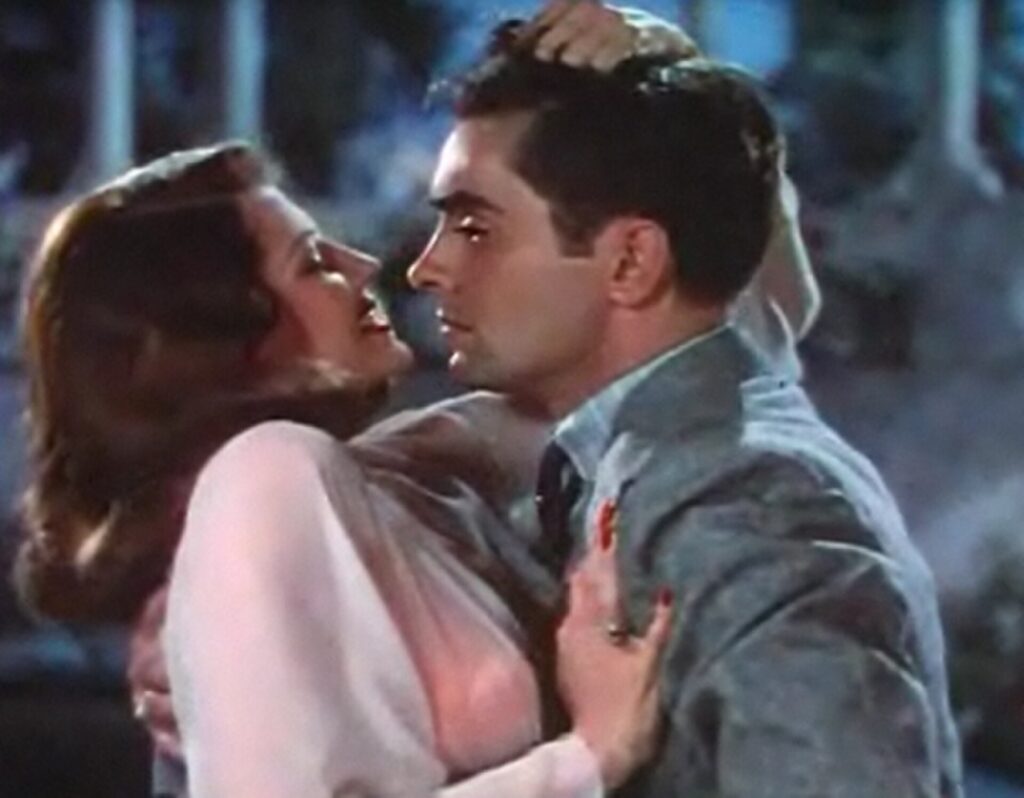
Spanish guitarist Vicente Gómez performed a version called Romance de Amor in the 1941 Hollywood film Blood and Sand, starring Tyrone Power and Rita Hayworth.
Gómez himself also became associated with authorship of the piece.
The Melody Had Already Reached International Cinema
This means that by the early 1940s—before Yepes’s famous soundtrack—the melody had already crossed from the classical guitar world into international cinema.
So Forbidden Games was not even the first major film to use it.
A Possible Timeline
The timeline becomes something like this:
nineteenth-century guitar manuscripts
→ early recordings around 1900
→ Vicente Gómez and Blood and Sand in 1941
→ Narciso Yepes and Forbidden Games in 1952
Rather than being the invention of one famous twentieth-century guitarist, Spanish Romance appears to have travelled through generations of performers, teachers, manuscripts, recordings, and films.
Yepes did not create that tradition.
But he played a decisive role in turning the piece into a worldwide standard.
The Musical Structure of Spanish Romance
Two Contrasting Halves
One reason the piece is so memorable is its remarkably simple large-scale structure.
It is divided into two strongly contrasting sections:
- the first in E minor,
- and the second in E major.
The Famous E Minor Section
The opening E minor section contains the melody most listeners immediately recognize.
A repeating arpeggio provides a continuous background while the melody, largely carried on the first string, moves slowly above it.
The harmonic language is simple, and much of the emotional effect comes not from complexity but from the contrast between the singing melody and the steady accompaniment.
The texture is remarkably economical: the accompaniment hardly seems to change, yet the melodic line gives the section a strong sense of direction.
A Sudden Change to E Major
Then the music changes dramatically.
The second section moves into E major—the parallel major key.
The arpeggio texture remains essentially the same, yet the emotional character becomes noticeably brighter and more open.
This shift from minor to major is one of the piece’s most effective features.
Nothing extravagant is required.
The accompaniment pattern remains almost unchanged, but the change of harmony creates an entirely different atmosphere.
The Return of the Minor-Key Melody
In many performances and editions, the E minor section eventually returns after the major section.
When it does, the familiar opening melody can feel even more poignant than before.
The listener has briefly entered a brighter musical world, only to return to the melancholy of the beginning.
The entire piece achieves its effect through a remarkably small amount of musical material.
How Difficult Is Spanish Romance?
The difficulty of Spanish Romance depends greatly on how much of the piece you play and how you choose to articulate the melody.
The opening E minor section is relatively straightforward for the left hand, while the right hand uses essentially the same arpeggio pattern throughout the piece, making it quite approachable for beginners if everything is played with free stroke (tirando).
The E major section, however, introduces more demanding barre chords, larger stretches, and position shifts, so the difficulty of the left hand increases considerably. .
The right hand also becomes more challenging if you choose to bring out the melody by playing the first note of each beat with rest stroke (apoyando) while keeping the surrounding arpeggio notes in free stroke.
As a practical guideline, the E minor section played entirely with free stroke can be considered beginner level; the complete piece played with free stroke is closer to early-intermediate level; and a performance that uses rest stroke to project the melody while also controlling tone, balance, and phrasing is best regarded as intermediate level.
The E Minor Section Is Accessible to Beginners
The famous opening section in E minor is the more approachable half of Spanish Romance.
The left hand makes effective use of open strings, and there are relatively few demanding barre chords or large stretches. Position changes are also considerably more manageable than those found later in the piece.
For this reason, the left-hand technique in the E minor section is accessible even to players who are still relatively new to classical guitar.
The right hand also follows essentially the same arpeggio pattern throughout the section. Once that pattern has become familiar, there are few major changes in the basic right-hand fingering.
If the entire texture is played with free stroke, the E minor section can reasonably be considered beginner-level repertoire.
The E Major Section Is Much More Demanding for the Left Hand
The second half, in E major, is a different story.
The right hand continues with almost the same arpeggio pattern, but the left hand must now deal with techniques such as:
- barre chords,
- wider stretches,
- shifts into higher positions,
- and more demanding chord shapes in which several notes must be held while the melody continues to move.
In other words, the right-hand pattern remains largely unchanged while the technical demands on the left hand increase sharply.
This explains a very common experience among players learning the piece: the first half may feel surprisingly manageable, only for the E major section to suddenly seem much more difficult.
Players who are still developing secure barre technique, left-hand flexibility, and accurate position shifts are especially likely to struggle here.
In that sense, Spanish Romance can serve as an excellent bridge between beginner and intermediate classical guitar repertoire.
The Basic Right-Hand Arpeggio Is Simple
This creates one of the characteristic experiences of learning the piece:
the first half can seem surprisingly easy, while the second half suddenly exposes weaknesses in barre technique, stretching, and position changes.
A player who can comfortably perform the entire E minor section may still find the major section frustrating at first.
This contrast is part of what makes the piece such a useful bridge between beginner and intermediate repertoire.
A Practical Difficulty Level
Modern teaching systems often place the complete piece around an intermediate level.
For example, Spanish Romance appears at Grade 5 level in the Royal Irish Academy of Music classical guitar syllabus.
A practical description might therefore be:
the E minor section is accessible to beginners, but performing the complete piece convincingly is closer to an early-intermediate or intermediate challenge.
Easy to Play, Difficult to Play Beautifully
The Notes Are Only the Beginning
Technical difficulty tells only part of the story.
Spanish Romance is a classic example of a piece in which playing the correct notes is much easier than making the music sound truly expressive.
Because the arpeggio pattern is so repetitive, a mechanical performance quickly becomes obvious.
Bringing Out the Melody
The guitarist must create several layers of sound at once.
The melody should sing above the texture.
The inner notes of the arpeggio should support rather than compete with it.
The bass should provide harmonic direction without becoming heavy.
In other words, the player is effectively controlling melody, accompaniment, and bass simultaneously.
Tone and Legato Matter
Good tone production also matters enormously.
There are few notes to hide behind. Small problems with phrasing, uneven arpeggios, abrupt position changes, or poorly voiced chords can easily disturb the atmosphere.
Smooth connections between chords are especially important. If the left hand releases too early during a position change, the continuous flow of the music can easily be broken.
A Piece That Grows with the Player
That is one reason the piece remains valuable even for experienced guitarists.
A beginner can make it recognizable.
A master can make the same simple notes sound completely different.
It is a piece that can be learned relatively early, yet revisited repeatedly as the player’s tone, balance, phrasing, and musical maturity improve.
Why Does the Piece Have So Many Names?
A Surprisingly Long List of Titles
Few classical guitar pieces have accumulated as many titles as this one.
Depending on the country, edition, recording, or performer, you may encounter names such as:
- Romance Anónimo
- Spanish Romance
- Romance de Amor
- Romance d’Amour
- Romanza
- Estudio en Mi de Rubira
- Jeux interdits
- Forbidden Games
The Names Reflect Its Uncertain Origins
The variety is not merely a naming problem.
It reflects the unusual history of the piece.
Because its original authorship is uncertain, there was never one universally accepted title attached to a known composer.
The melody circulated through teachers, performers, manuscripts, recordings, publishers, and eventually films.
Each new context gave it another identity.
Romance Anónimo
In Spanish-speaking classical guitar circles, Romance Anónimo remains particularly appropriate because it openly acknowledges the uncertainty surrounding the composer.
Literally, it means “Anonymous Romance.”
Spanish Romance
In English-speaking countries, Spanish Romance is perhaps the most immediately recognizable title.
It is descriptive, easy to remember, and has become firmly established in guitar publications and recordings.
Forbidden Games
For listeners who discovered the melody through René Clément’s film, Forbidden Games may be the name that feels most natural.
The many titles are therefore part of the piece’s history rather than an accident.
From Anonymous Guitar Study to Global Standard
The Piece Already Existed Before Yepes
Whatever its exact origins, one fact is clear:
the melody did not begin with Narciso Yepes.
It had already been written down, recorded, performed, and even used in another film.
Yepes Changed Its International Reputation
Yet another fact is equally difficult to dispute:
Narciso Yepes transformed the international reputation of the piece.
Forbidden Games reached an enormous international audience, and Yepes’s distinctive guitar playing became one of the film’s defining sounds.
The movie effectively gave an old guitar melody a new identity.
A Permanent Part of the Classical Guitar Repertoire
Afterward, Spanish Romance became a standard of the classical guitar repertoire and an enduring teaching piece.
More than seventy years after the release of Forbidden Games, guitarists around the world continue to learn it, perform it, record it, and arrange it.
The film itself has also retained its cultural status. A restored version of Jeux interdits was screened in the Venice Classics section of the Venice International Film Festival in 2024, more than seven decades after its original release.
A Simple Piece with an Unusually Complicated History
Musically Simple, Historically Complex
At first glance, Spanish Romance could hardly be simpler.
- A repeated arpeggio.
- A lyrical melody.
- An E minor section followed by E major.
Yet behind those few pages of music lies more than a century of unanswered questions.
Questions That Remain Unresolved
Was Antonio Rubira the composer?
Was the piece originally a guitar study?
How widely did it circulate before the earliest surviving recordings?
Why did several twentieth-century guitarists become associated with its authorship?
And how did Narciso Yepes’s performance become so closely connected with a piece that had already existed for decades?
We may never know exactly who first wrote the melody.
A Piece That Belongs to the Guitar Tradition
Perhaps that uncertainty is part of its appeal.
Spanish Romance is not simply the work of one famous guitarist. It is a piece that seems to have passed through the hands of generations of guitarists before becoming part of the instrument’s shared musical language.
Narciso Yepes may not have created it from nothing.
But through Forbidden Games, he helped give an anonymous nineteenth-century guitar melody something perhaps just as important: a worldwide audience.
Today, Spanish Romance remains one of classical guitar’s great paradoxes—a piece simple enough for a developing guitarist to approach, expressive enough for great players to revisit throughout their lives, and famous enough to be recognized around the world despite the fact that we still do not know for certain who wrote it.
Sources & References
• Narciso Yepes, “Narciso Yepes Speaks on Forbidden Games Romance.” Archival interview recording, YouTube.
https://www.youtube.com/watch?v=TWJfF0XegAw&utm_source=chatgpt.com
• Gerardo Arriaga, “Entrevista con Marysia Szumlakowska, Ana Yepes e Ignacio Yepes.” Roseta: Revista de la Sociedad Española de la Guitarra, No. 2, May 2009, pp. 138–151. Sociedad Española de la Guitarra.
https://www.sociedadespañoladelaguitarra.com/images/pdf/02%20Entrevista%20Yepes%20Roseta-02opt.pdf?utm_source=chatgpt.com
Peter Matthews, “Forbidden Games: Death and the Maiden.” The Criterion Collection, December 5, 2005.
https://www.criterion.com/current/posts/408-forbidden-games-death-and-the-maiden